
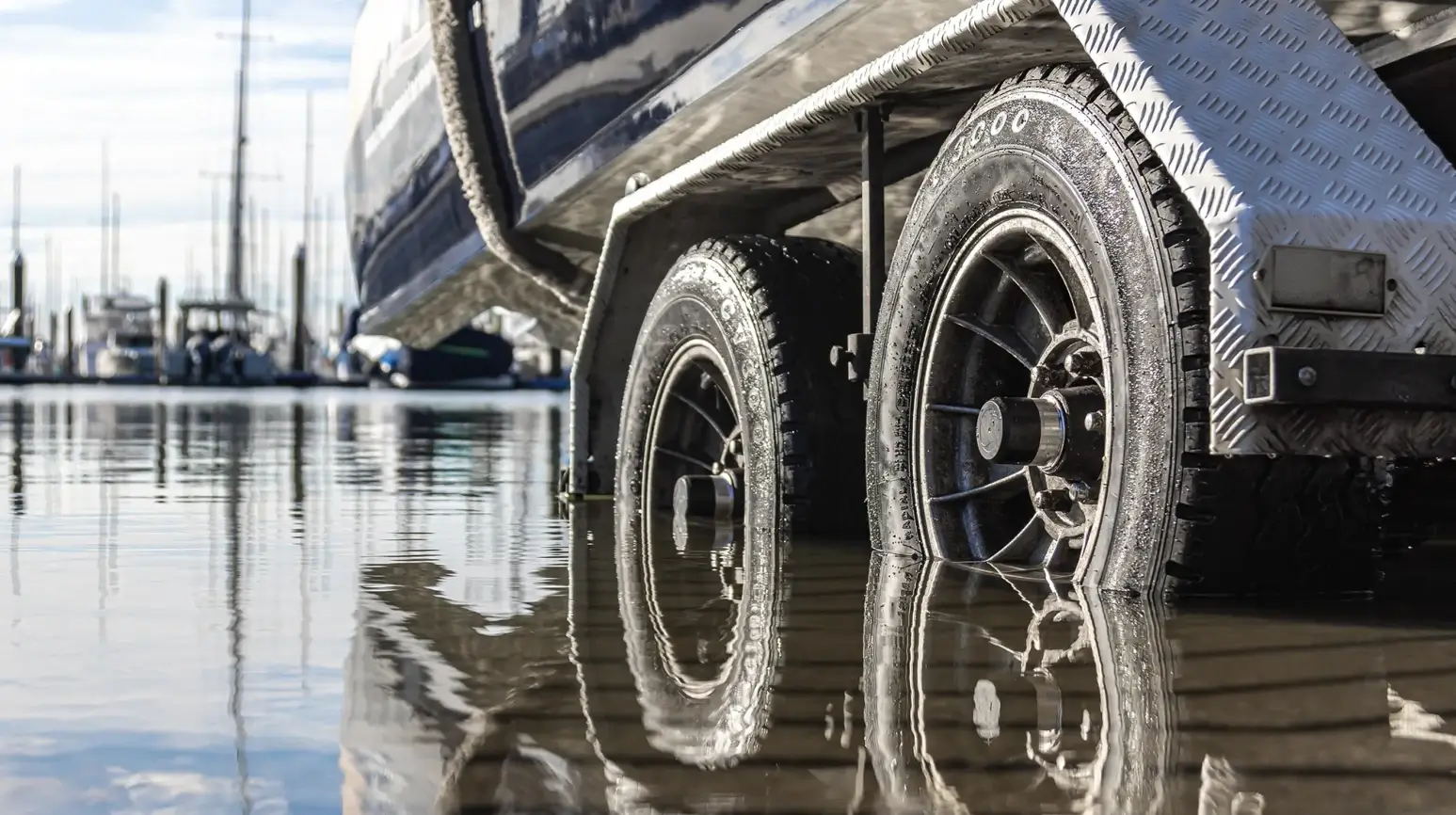
Boat trailers work harder than most other trailers. They carry heavy loads (sometimes lots of fish), get backed into water, and then hit the highway at speed. Understanding why boat trailers fail can help you avoid breakdowns, dangerous situations, and expensive repairs for boat trailer bearing failure.
This page explains the most common causes of failure, how theses issues develop, and what you can do to prevent them.
What Makes Boat Trailers Different?
Not all trailers are created equal. Boat trailers deal with conditions most trailers never see:
- They get submerged in water
- They’re exposed to salt and sand
- They often sit unused for long periods
- They carry heavy, uneven loads
- They go from water ramp to highway in minutes
These combinations puts serious stress on wheel bearings and hubs. And most problems don’t show up straight away. They build up quietly – trip after trip.
The Most Common Causes of Boat Trailer Failure
A boat trailer might look like any other trailer. But its life is much tougher.
While a garden trailer gets dusty, a boat trailer gets dunked in water, sometimes saltwater and then sits in the sun or storage for weeks or months.
That’s a recipe for bearing problems.
Water Intrusion and Seal Failure
When you back your trailer into the water, the hubs get submerged. After you drive away, the hot hub cools down. As it cools, it creates a slight vacuum inside. If the seal isn’t perfect, it can pull in water, sand, and salt.
That contamination breaks down grease and starts rust inside the bearing.
This is one of the biggest reasons boat trailers fail and it happens slowly over time.
Corrosion from Saltwater and Freshwater Exposure
Saltwater is harsh. Even if you rinse your trailer, tiny salt particles can remain inside the hub. Over time, that salt eats away at metal parts.
Freshwater isn’t harmless either. Dirty water can still bring in debris and moisture that causes rust.
Rust weakens bearings. Weak bearings fail.
Heat Build-Up After Launch and Highway Driving
A common pattern for most boat owners: launch the boat, pack up, and head straight onto the highway.
The hubs heat up quickly under load. If there’s already moisture inside, heat makes the damage worse. That rapid change from water to highway speed – creates stress on bearings and seals.
Heat is often the final step before failure.
Poor Lubrication and Missed Servicing
Boat trailer grease breaks down faster than normal trailer grease because of water exposure. If you stick to “once a year” servicing, that may not be enough. Without proper lubrication, friction builds.
Friction creates heat. Heat destroys bearings.
It’s that simple.
Uneven Loads and Trailer Misalignment
A boat’s weight distribution changes with hull shape, fuel, gear, and passengers aboard.
If your trailer isn’t adjusted properly, one side can carry more load than the other. That extra load means extra heat and faster wear.
Early Warning Signs Specific to Boat Trailers
Some signs are universal, but others are common in marine use, watch for:
- Moisture or brown residue around the hub
- New noises after a launch day
- Excess heat on one hub compared to the other
- Vibration that wasn’t there before
If one wheel is hotter than the others, something isn’t right.
Why Temperature Matters More for Boat Trailers
In marine environments, grease integrity and bearing seals are under constant attack from moisture and heat cycles. A hot hub after a boat launch isn’t normal – it’s a signal that heat and contamination are degrading the bearing before it fails. Heat is the earliest and clearest sign that a bearing is struggling.
Monitoring hub temperature in real time is the best and only way to detect these early stage failures before they become catastrophic.
What Happens When a Boat Trailer Fails on the Road
Trailer failure isn’t just inconvenient- it’s dangerous. At highway speeds, a bearing failure can lead to:
- Wheel lock-up
- Loss of steering stability
- Severe tire and hub damage
- Complete roadside shutdown
- Costly towing and repair bills
- Safety risks for you and other road users
Understanding why boat trailers fail helps you avoid all of this.
How to Prevent Boat Trailer Failures?
You already know the causes! Now here’s what actually works:
Rinse and Inspect After Every Water Launch
Fresh and salt water both leave residues. Rinse thoroughly, then inspect.
Service Bearings More Often
Don’t wait for annual servicing – check before and after long trips.
Use Quality Seals and Marine-Rated Grease
Marine-grade grease and seals are worth it as they withstand water intrusion better.
Monitor Bearing Temperature on the Move
Manual hub checks are too late if you’re already on the road. Real-time monitoring gives you early warning.
Boat Trailer Failure FAQs
Do boat trailer bearings fail more often than other trailers?
Yes, this is due to repeated water exposure and corrosion accelerate failure.
Can I prevent failure just by greasing more?
Greasing helps, but without addressing water intrusion and heat buildup, it won’t protect you fully.
Is wheel bearing heat normal after towing a trailer?
A warm bearing after a short drive is normal, but overheating or rapid temperature rise is not.