
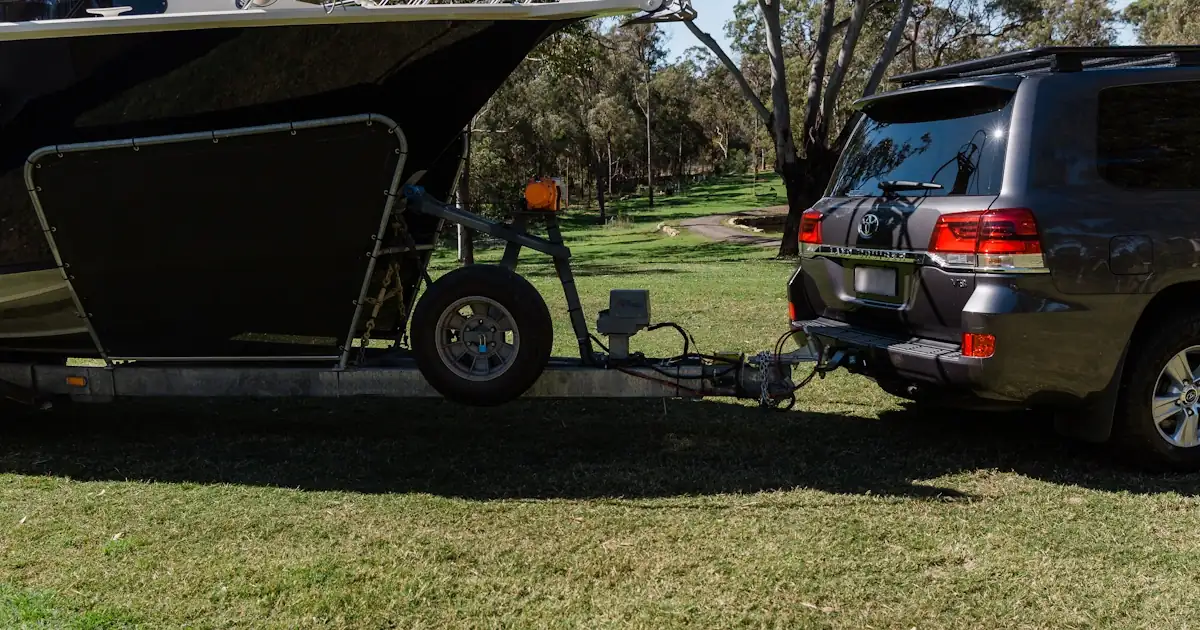
Towing safely doesn’t have to be complicated – but it does require preparation. Whether you’re hauling heavy equipment for work or heading out with a camper, even small oversights can turn into serious safety risks on the road. We have put together some towing safety tips based on the common mistakes most trailer users make.
The good news? Most towing incidents – including trailer sway, tyre blowouts, and braking failures – are preventable with the right planning and awareness.
Below, we break down the three most common towing mistakes and the simple steps you can take to avoid them.
1. Overloading Your Vehicle or Trailer
One of the biggest towing mistakes is overloading. Every vehicle has a maximum towing capacity, and every trailer has weight limits as well. Exceeding those limits can create serious safety issues including poor braking, reduced steering control, overheating, and increased wear on tyres and suspension components.
Even if your vehicle can pull the load, it may not be able to stop it safely – especially in emergency braking situations or downhill driving.
Why overloading is dangerous
Overloading can cause:
- Longer stopping distances
- Brake overheating and failure
- Tyre blowouts from excess heat
- Transmission strain and engine overheating
- Loss of control in sharp turns or sudden lane changes
How to avoid it:
- Check your vehicle’s towing capacity in the owner’s manual.
- Confirm your trailer’s Gross Vehicle Weight Rating (GVWR) – maximum total weight that a trailer or vehicle is rated to carry safely.
- Include cargo weight, fuel, tools, passengers, and accessories in your calculations.
- If you’re unsure, weigh your trailer at a local scale before traveling long distances.
Towing safety tip: If your load feels “heavy” while accelerating, braking, or turning, it probably is. Stay conservative within weight limits.
2. Uneven Load Distribution
Even if you’re under the towing capacity, an uneven or improperly balanced trailer can create dangerous instability. This is one of the most common causes of trailer sway.
Trailer sway happens when the trailer begins to swing side-to-side behind your tow vehicle, often at highway speeds or in windy conditions. Once sway begins, it can escalate quickly if not handled properly.
Why uneven loads cause problems
If too much weight is placed toward the back of the trailer, the trailer can behave like a pendulum. This reduces traction on your rear tyres and makes steering less predictable.
Uneven loading can lead to:
- Trailer sway at highway speeds
- Poor turning control
- Increased risk of jackknifing
- More stress on the hitch and suspension
How to avoid it:
- Place heavier items toward the front of the trailer.
- Aim for roughly 60% of weight in the front half of the trailer. While 60/40 is a standard guideline, always consult your trailer and vehicle owner’s manual for specific weight distribution recommendations.
- Avoid stacking heavy cargo at the rear.
- Secure cargo so it cannot shift while driving.
- If towing a larger trailer, consider a weight distribution hitch for better balance.
Towing safety tip: Trailer sway is often caused by speed. Even if everything is loaded correctly, driving too fast can still trigger instability.
3. Skipping the Pre-Trip Inspection
Many towing accidents happen because drivers skip basic inspections. It’s easy to assume everything is fine – until a loose hitch, faulty light connection, or worn tyre causes a failure on the road. A simple inspection before every trip can prevent most towing-related breakdowns and safety hazards.
What can go wrong without an inspection
Skipping a pre-trip check can lead to:
- Trailer separation due to an improperly latched coupler
- Brake lights or turn signals not working
- Tyre blowouts from low pressure
- Broken safety chains or missing pins
- Loose lug nuts or overheating wheel bearings
How to avoid it:
Before every trip, inspect the following:
Quick Towing Safety Checklist
- Hitch is properly connected and locked
- Trailer coupler is fully seated
- Safety chains are crossed under the trailer tongue
- Trailer lights (brake, turn, running lights) are working
- Tyre pressure is correct on both trailer and tow vehicle – Smarter Towing can help with this.
- Load is secured and balanced
- Lug nuts are tight
- Brake controller (if applicable) is working properly
Towing safety tip: After driving 30 mins, pull over and re-check your hitch connection, straps, and tyre condition. Many issues show up early once heat builds. Alternative use Wheel Sensei to monitor your trailer wheels for you.
Hidden Risks Most Drivers Don’t Think About
Even when towing capacity, load distribution, and inspections are handled correctly, there are a few hidden towing risks that can still catch drivers off guard.
Tyre Heat and Blowouts
Trailer tyres experience intense heat buildup, especially on long highway drives. Underinflated tyres are one of the most common causes of blowouts.
What to do:
- Check tyre pressure before every trip.
- Replace trailer tyres that are old or cracking.
- Stop every couple of hours to check tyres for overheating or use Wheel Sensei trailer monitoring system.
Wheel Bearings and Brake Overheating
Wheel bearings and brakes can overheat silently until failure occurs. If you notice a burning smell or unusually hot wheel hubs, stop immediately.
What to do:
- Inspect wheel bearings regularly.
- Service trailer brakes as recommended.
- Never ignore grinding noises or vibration while towing.
- Get Wheel Sensei by Smarter Towing – the complete TPMS bundle
Bonus Towing Safety Tips (Highly Recommended)
Here are a few additional towing safety tips that can make a big difference:
Drive Slower Than You Normally Would
Higher speeds reduce your reaction time and increase sway risk. Towing should always be done at a controlled speed, especially in windy conditions.
Increase Following Distance
Braking distance increases significantly while towing. Leave extra room between you and the vehicle ahead.
Take Wider Turns
Trailers track inside your turn radius. Wide turns help prevent curbing the trailer wheels or clipping objects.
Use Lower Gears on Hills
When going uphill or downhill, lower gears reduce stress on your brakes and transmission.
FAQ: Towing Safety Tips
What are the most important towing safety tips?
Stay within weight limits, load the trailer evenly, secure cargo, and check all connections and tyres before driving. These are the biggest factors in preventing towing accidents.
What causes trailer sway?
Trailer sway is most commonly caused by uneven weight distribution, towing too fast, strong crosswinds, or improper tongue weight. Slowing down and balancing the load properly are the best ways to prevent it.
How much weight should be on the trailer hitch?
A general guideline is 10–15% of the gross total trailer weight should be on the tongue. Too little tongue weight increases sway risk.
What is the safest speed when towing?
The safest speed is always the speed where your trailer remains stable and controllable – especially in wind or traffic.
Final Thoughts: Tow Safe and Stay Prepared
Towing doesn’t have to be stressful, but it does require careful attention to safety. By avoiding the three most common towing mistakes – overloading, uneven weight distribution, and skipping inspections – you dramatically reduce the risk of breakdowns and accidents.
A little preparation before you hit the road can save you time, money, and potentially prevent serious damage or injury.
If you tow regularly for work or long trips, investing in safety monitoring tools and staying proactive about maintenance can make towing safer and more predictable year-round.
Safe travels.